Quick Fix for a Noisy, Non-Cooling Outdoor Unit: Tips for Homeowners
Heating and Air Conditioning | Ooltewah | Heating and Air Conditioning in Ooltewah
When an outdoor air-conditioning unit starts making a whining sound and stops cooling your home, it’s tempting to worry about a full system replacement. In one recent case in Ooltewah, a homeowner noticed exactly that: a persistent noise coming from the condenser outside, and warm air circulating inside despite the thermostat being set low.
A HEP technician arrived, ran through a quick inspection and testing routine, and found the culprit was a small but essential piece: the dual-run capacitor. Once replaced, the unit sprang back to life, cycling on and off smoothly and restoring cool comfort within minutes.
The Homeowner’s Headache
- Symptom: Strange whine from the outdoor box, plus warm air inside
- Location: Outside the house, easily accessible with a stroll across the backyard
- Suspected Cause: Electrical component failure rather than a refrigerant leak or compressor damage
By focusing on the common warning signs—noise and loss of cooling—a HEP technician can often zero in on electrical parts before recommending major repairs.
How the Problem Was Solved
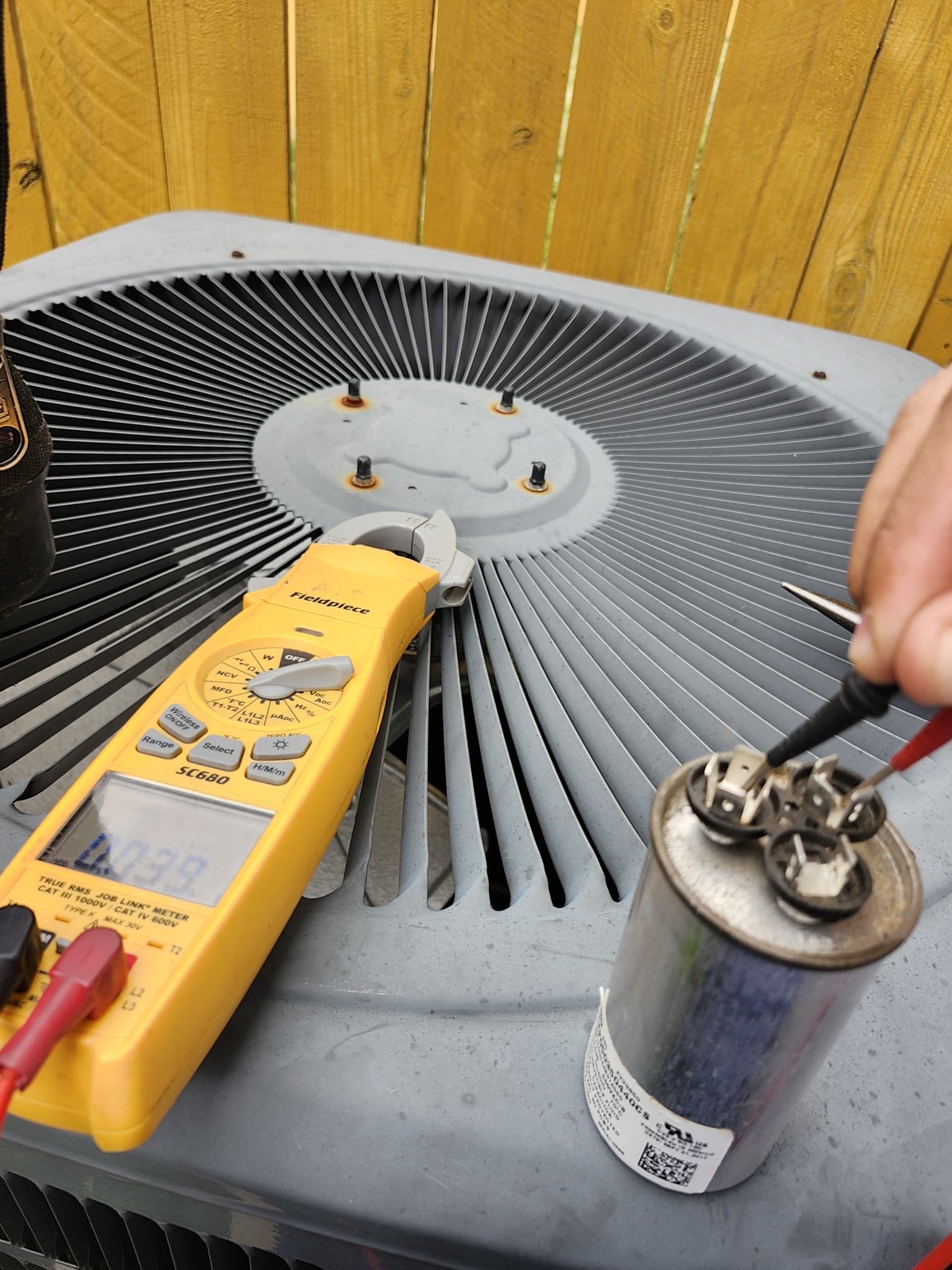
- Diagnosis: The technician used a digital multimeter to test the capacitor’s capacitance.
- Replacement: A fresh, properly rated capacitor was installed on the outdoor unit.
- Verification: The system was cycled multiple times to confirm it ran quietly and cooled correctly.
- Maintenance: A preventive-maintenance checklist was completed, and the homeowner was invited to join a loyalty plan for regular tune-ups.
With that simple swap, a component smaller than a soda can brought the entire heat pump back to full capacity—right in time for cooling season.
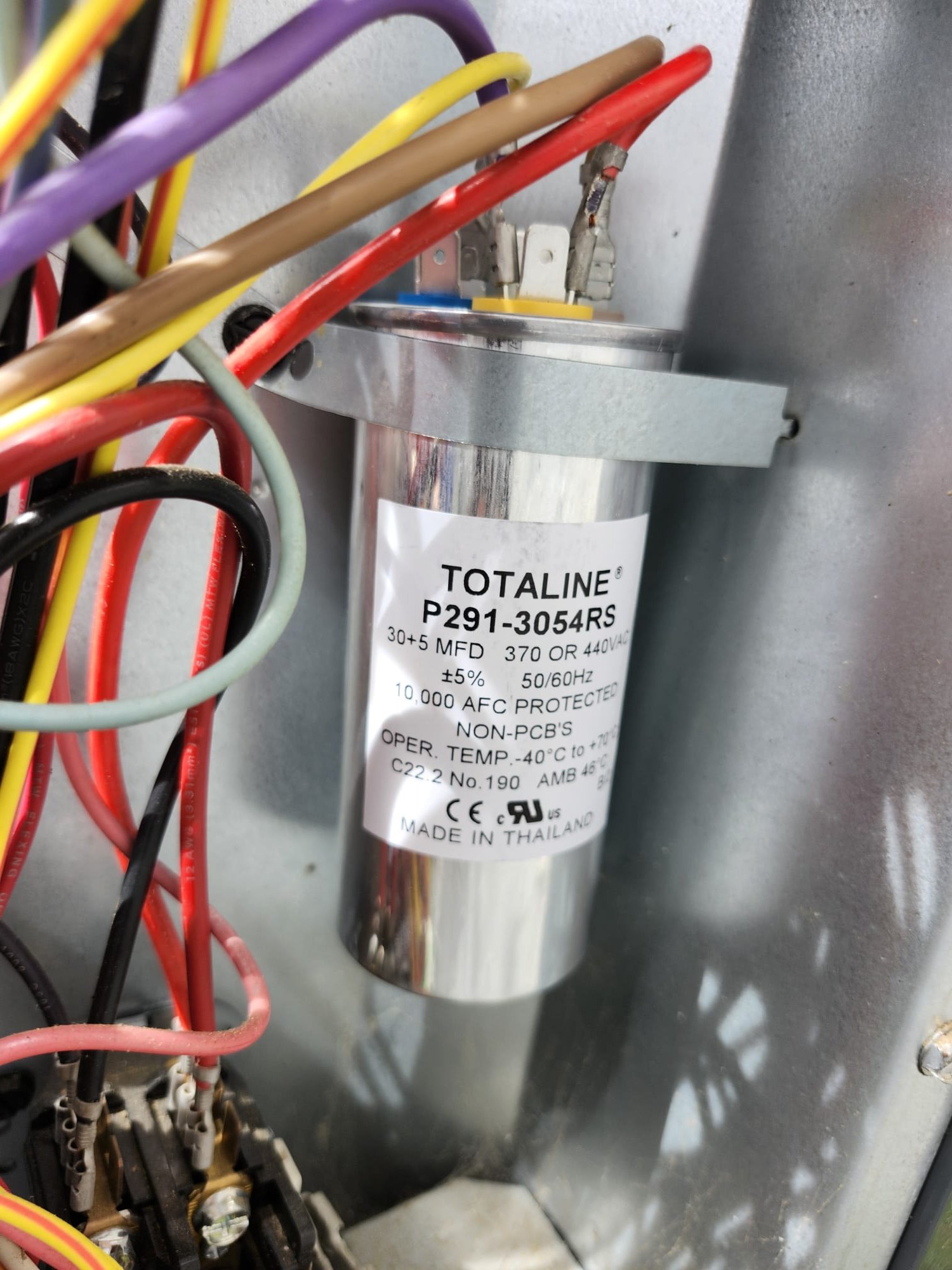
This shiny new capacitor is what keeps the condenser’s fan and compressor running smoothly. Replacing a worn-out unit like this can restore cooling performance quickly.
Homeowner Tips to Prevent Surprises
1. Listen for Unusual Noises
A hum or whine from the outdoor unit often points to electrical parts nearing the end of their life. Don’t ignore new sounds—schedule a professional check.
2. Keep the Area Clear
Trim back plants and debris around the condenser. Good airflow helps electrical components stay cool and last longer.
3. Change Filters Regularly
Clogged air filters make your system work harder. Fresh filters mean less stress on start-up parts like capacitors.
Professional tools and know-how help pinpoint issues before they lead to full breakdowns.
Why Regular Maintenance Matters
Joining a service plan means seasonal inspections of electrical connections, refrigerant levels, and safety switches—keeping small issues from becoming costly failures. A simple capacitor test might save you from a mid-summer repair emergency.
Whether you’re new to home ownership or just looking to avoid unexpected bills, understanding these basics about your outdoor unit can keep your system running efficiently. And if you ever hear that telltale whine, a quick call to a trusted HEP technician in Ooltewah could be all it takes to restore your cool.
Published on March 26, 2026